Cities
London Taxi Advertising
The black cab is one of the oldest advertising vehicles in the world, and one of the few with cultural weight of its own. Here is what supersides, full liveries and tip seats cost in 2026, who sells them, and what a cab in central London actually earns you in memory.
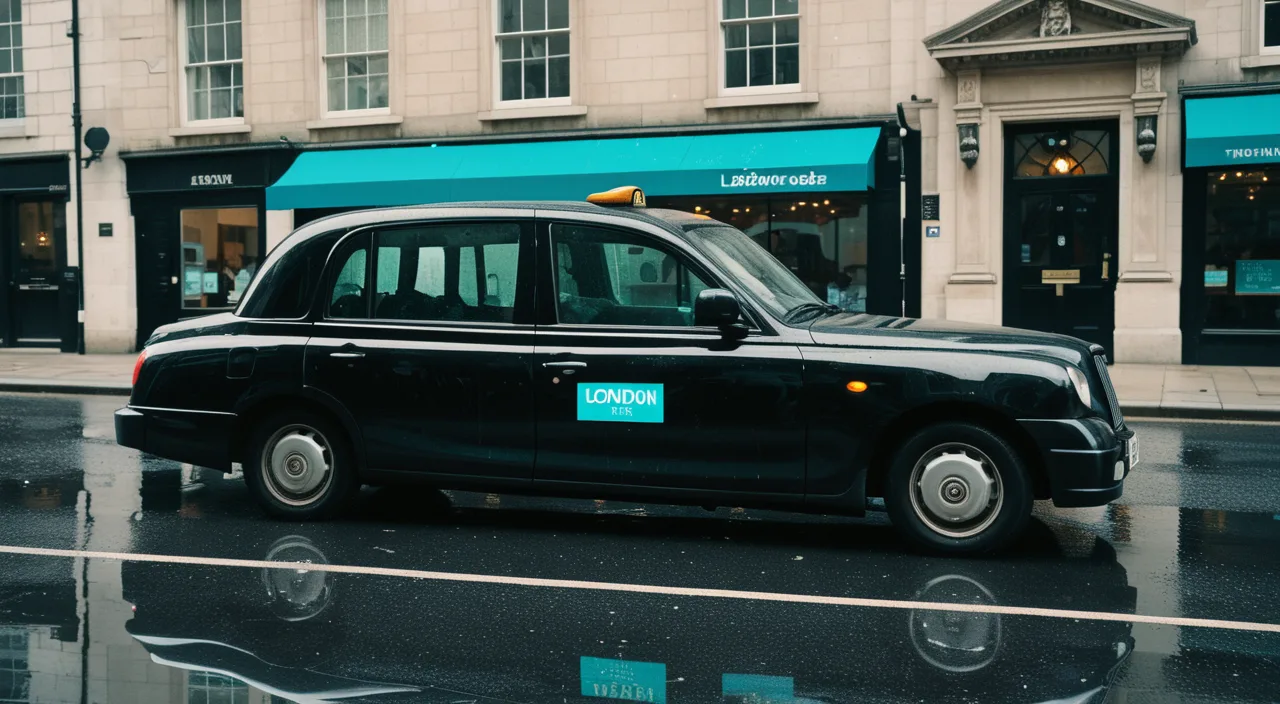
London taxi advertising runs on the black cab, and the black cab runs on rate ranges rather than rate cards. Supersides, the large side panels, typically cost £200 to £500 per taxi per month. A full livery wrap runs about £1,000 to £2,500 per taxi per month in media, with production billed separately at £1,000 to £5,000 per vehicle. Interior tip-seat panels cost roughly £50 to £200 per taxi per month (Excite OOH, Taxi Wraps UK). Every one of those figures is an industry estimate, not a quote, and London pricing moves with route, season and demand.
This guide covers what each black-cab format costs, who actually sells the inventory, what a cab in central London really delivers in memory rather than impressions, and how the market compares with New York. For the cross-market view, start at the city-by-city guide.
How much does London taxi advertising cost?
London prices in pounds and by the month, unlike the four-week cycles common in US markets. The ranges below are the consistent picture across UK taxi media sellers, and they should be treated as estimates to anchor a budget, not as quotes.
| Format | Cost per taxi, per month | Note |
|---|---|---|
| Superside (large side panel) | £200–£500 | The workhorse format; central routes price higher. |
| Full livery (complete wrap) | £1,000–£2,500 media | Production adds £1,000–£5,000 per vehicle, one-off. |
| Tip seat (interior panel) | £50–£200 | Captive-rider format at the lowest entry price. |
| Receipt advertising | £100–£300 | Niche; pairs with interior formats. |
All ranges: Excite OOH and Taxi Wraps UK, industry estimates. Longer bookings usually earn a lower monthly rate, and campaigns weighted to central London and tourist corridors carry a premium. A single-cab test fits a small budget; fleet coverage of central London is a five-figure monthly commitment.
The black-cab formats, and what each one buys
Supersides: the default buy
The superside is the large panel along the cab's flank, and it is the format most London campaigns start with. It rides at eye level with pavements and bus lanes, which matters in a city where so much of the audience is on foot. At £200 to £500 a month per cab, it is the price-per-presence workhorse, broad reach, glance-level attention.
Full livery: the statement format
A full livery turns the entire cab into the creative, and a wrapped black cab in central London is part of the city's visual furniture in a way a poster never is. The premium is real: £1,000 to £2,500 a month in media plus a £1,000 to £5,000 production bill that only amortises if the campaign runs long enough. The same logic as taxi wraps everywhere applies, the impact is highest and so is the cost of changing your mind.
Tip seats and interiors: the captive buy
Tip-seat panels face the passenger for the whole ride. The audience is tiny next to a superside's, but it is seated, undistracted and exposed for minutes rather than a second, the same narrow-but-deep trade described in the interior screen guide. At £50 to £200 a month it is also the cheapest way into the market.
Who sells London taxi advertising?
London is one of the oldest taxi advertising markets in the world, and its inventory is consolidated with established media owners rather than scattered among drivers. The clearest signal of the market's depth: Firefly, the US mobility-media operator, entered the UK in July 2022 by acquiring Ubiquitous, a London taxi advertising specialist with roughly 40 years in the market (Firefly). You buy from media owners of that kind, or through an out-of-home agency, and rates are negotiated per campaign, which is exactly why public rate cards are thin and the ranges above are ranges.
What a black cab actually reaches
A London cab spends its day in the densest pedestrian traffic in the UK, so the impression counts vendors quote are genuinely large. The honest follow-up question is the same one this site asks of every format: how many of those impressions become memories? Industry funnel data says 30 to 50% of passers can physically see a moving ad, only a fraction consciously process it, and 0.4 to 2% remember the brand (Geopath, Digital Signage Today).
That is not an argument against the black cab. It is an argument for buying it the way you would buy any media: on real reach and cost-per-memory, not the impression line. The arithmetic is the same in pounds as in dollars, and the Cost & Real-Reach Estimator will run it for your fleet size before a media owner runs it for you.
London versus New York
The two flagship taxi markets price similarly at the top of their national ranges and differ in structure. New York layers explicit regulatory costs on top of the media, a TLC-approved rooftop device, a paid annual permit, and a $1,500 licensing regime for interior providers (NYC TLC), which the New York guide covers in detail. London's costs concentrate in the media and production instead, with compliance handled by the established media owners. New York's signature format is the rooftop unit; London's is the superside and the full livery, since the black cab carries no rooftop ad unit the way a yellow cab does.
For a brand choosing between them, the question is not which city is cheaper, it is where your customers are, and which format's attention pattern fits your goal. The recall funnel does not care which side of the Atlantic the cab drives on.
Is black-cab advertising worth it?
The black cab earns its premium when the campaign wants presence in central London's pedestrian core, a format with cultural weight, and a long enough run to amortise production. It is the wrong buy for a short burst on a thin budget, where a handful of supersides or an interior test will tell you more per pound. Anchor the decision the way this site always recommends: estimate the real reach, divide cost by memories, and treat every figure above as the start of a negotiation, not the end of one. Whether taxi advertising works walks through the full recall math.
Frequently asked questions
How much does London taxi advertising cost?
What is a taxi superside?
How much does it cost to wrap a London black cab?
Who sells black-cab advertising in London?
Is taxi advertising in London effective?
Figures on this page are industry estimates and vary by market and vendor. Prices and reach are directional, not quotes. Every claim links to its source; see all sources.